
In this blog, you will learn:
What an Electrician is.
What the responsibilities of an Electrician are.
What qualifications an Electrician needs.
What skills an Electrician needs.
Who employs an Electrician.
Where the latest Electrician jobs are and how to apply for them.
What is the role of an Electrician?
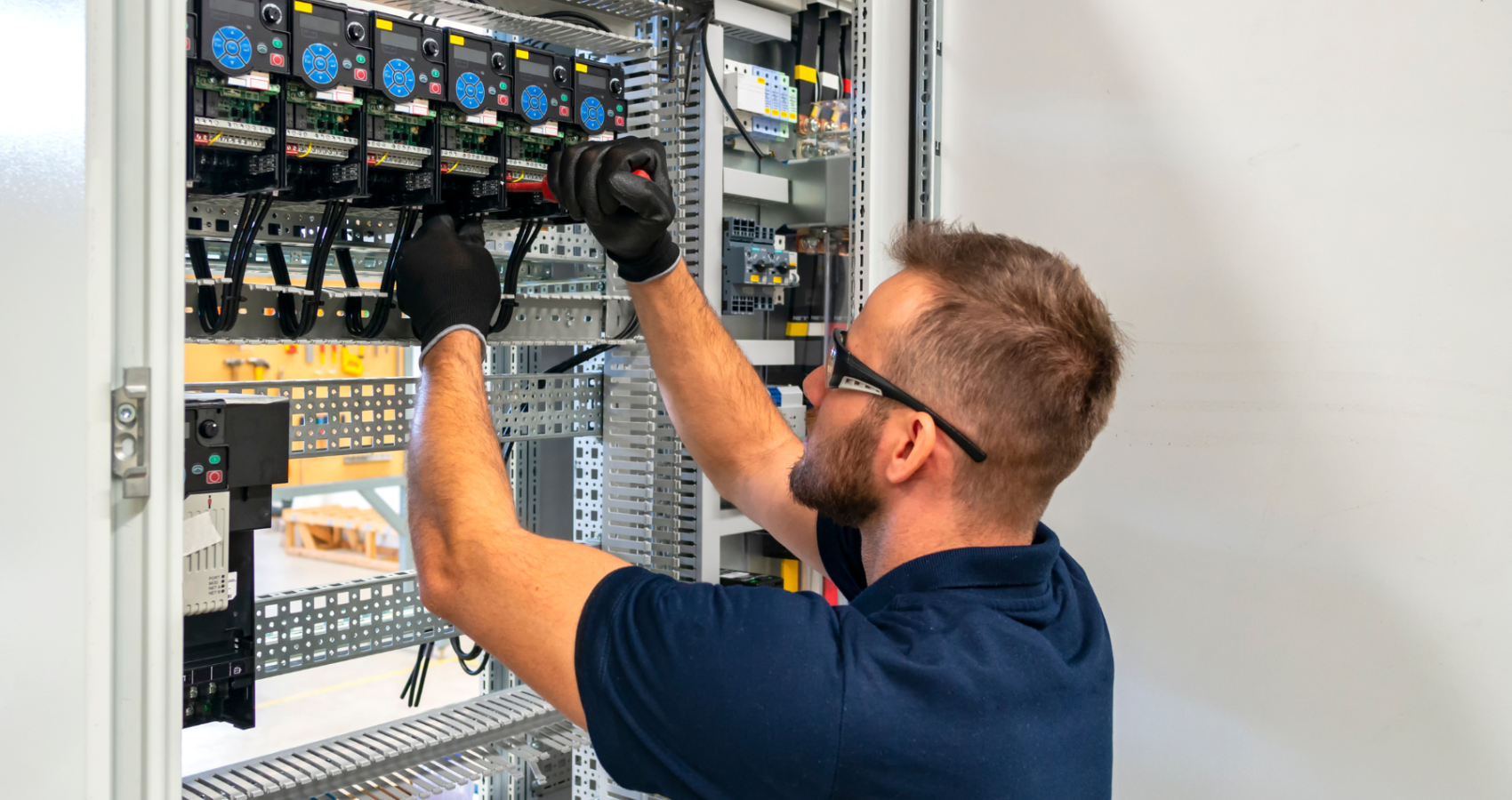
An Electrician is a highly skilled tradesperson whose job it is to design and install new electrical wiring systems, whether this be for buildings, transmission lines, machinery or other electronic equipment.
An Electrician is also required to maintain and troubleshoot existing electrical wiring to ensure the safety of such systems.
An Electrician can work with a variety of electrical infrastructures, including anything from a lightswitch in a residential building, to the traffic management systems found on public roads.
As well as infrastructure and machinery, an Electrician may also specialise in the electronics of ships and aircrafts to ensure the safety and efficiency of their on board electrical wiring systems.
Depending on the type of infrastructure they work with, Electricians can be split into four categories:
A Residential Electrician will work in a residential setting such as a family home.
A Commercial Electrician will be based on sites such as schools and hospitals.
An Industrial Electrician will work in an industrial setting with electrical machinery.
A Low Voltage Electrician is responsible for the installation of phone lines and fibre optic cables.
What are the responsibilities of an Electrician?
While working as an Electrician, you will be required to:
Rewire broken electrical systems.
Check electrical systems to ensure they are safe.
Diagnose electrical faults.
Ensure electrical systems meet safety regulations.
Advise on replacing electrical equipment.
Draft electrical installation plans.
Create electrical systems.
Install electrical systems.
Maintain electrical systems.
Understand blueprints and technical diagrams.
What qualifications does an Electrician need?
There are a number of ways to become an Electrician including college courses and apprenticeships.
Completing a college or NVQ course is a popular route to becoming an Electrician and will provide you with the practical and technical skills needed to practise the job safely.
If you’re looking to complete a college course, a Level 2 Diploma in Access to Building Services Engineering, a Level 2 and Level 3 Diploma in Electrical Installation or a T Level in Building Services Engineering for Construction will equip you with the relevant knowledge to explore a career as an Electrician.
If learning on the job whilst completing an apprenticeship is more appealing to you, an Installation and Maintenance Electrician Advanced Apprenticeship or a Domestic Electrician Advanced Apprenticeship are both options to explore.
An apprenticeship completed through the armed forces will also provide you with the skills and knowledge needed to trade as an Electrician.
It is a good idea to complete as much practical experience as possible as this will enhance your employability when looking for full time Electrician jobs.
What skills does an Electrician need?
Key skills of an Electrician include:
Maths competency to decipher technical plans.
Good communication to liaise effectively with colleagues and clients.
Patience to successfully fix complicated electrical faults.
An eye for detail to spot potentially dangerous electrical faults.
General construction knowledge to understand the electrics of different infrastructures.
Confidence to use potentially dangerous tools.
Teamwork to successfully work alongside other tradespeople on important projects.
Physical fitness for climbing scaffolding and crouching in small spaces.
Flexibility to work on emergency issues or last minute jobs.
Good time keeping to efficiently move from one job to the next.
Who employs an Electrician?
An Electrician can be employed by a number of organisations.
Often an Electrician will be employed by a council, housing association or subcontractor to complete important electrical work. Private clients and construction companies may also employ an Electrician to work on an important project alongside other tradespeople such as Plumbers and Joiners.
Electricians may also choose to be self-employed and will take bookings for work directly instead of being assigned to a project by an employer.